

-
Call Now +86 13693186054
-
Any Questions info@yitaflexstone.com
MCM Flexible Stone vs Traditional Wall Materials | A Commercial Cladding Comparison Guide

Architects, interior designers and commercial contractors frequently struggle to pick suitable wall finishes for retail, hospitality and public interior projects. Many traditional wall materials have obvious limitations: excessive dead load, inability to wrap curved surfaces, short service life or high ongoing maintenance work. This guide compares MCM flexible stone against widely used traditional wall materials, covering natural stone, wallcoverings and water-based latex paint. We break down performance, installation, cost, aesthetic and maintenance differences to help specifiers select the right wall cladding for commercial feature walls, curved surfaces and high-footfit retail spaces.
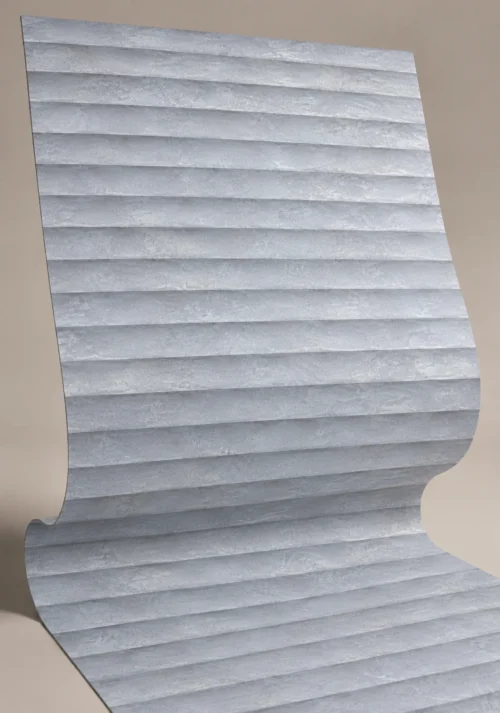
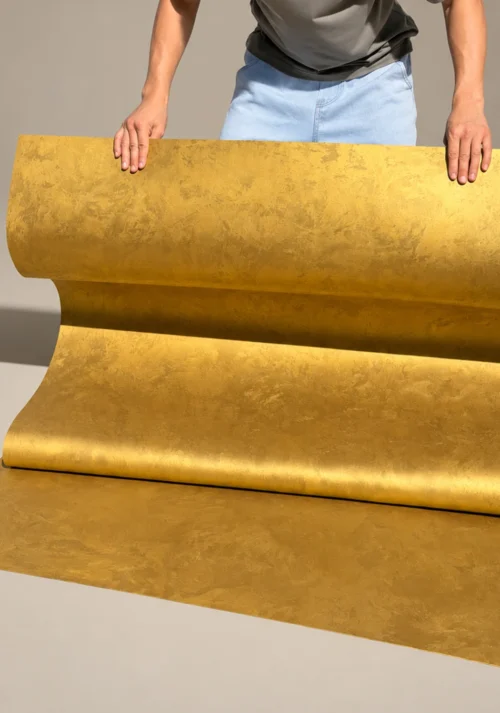
MCM flexible stone is a thin, lightweight mineral composite cladding sheet made from modified clay and natural mineral aggregates. It delivers authentic stone or rammed-earth textures while retaining bendable performance. At only 2–4mm thick and 3–7kg per square meter, it adds minimal load to partition substrates. It can wrap curved walls and columns, and meets international commercial fire safety standards for public spaces.
Internal link hint: Link to our blog MCM Flexible Stone Application Case Studies, to view a selection of projects featuring YITA MCM flexible stone.
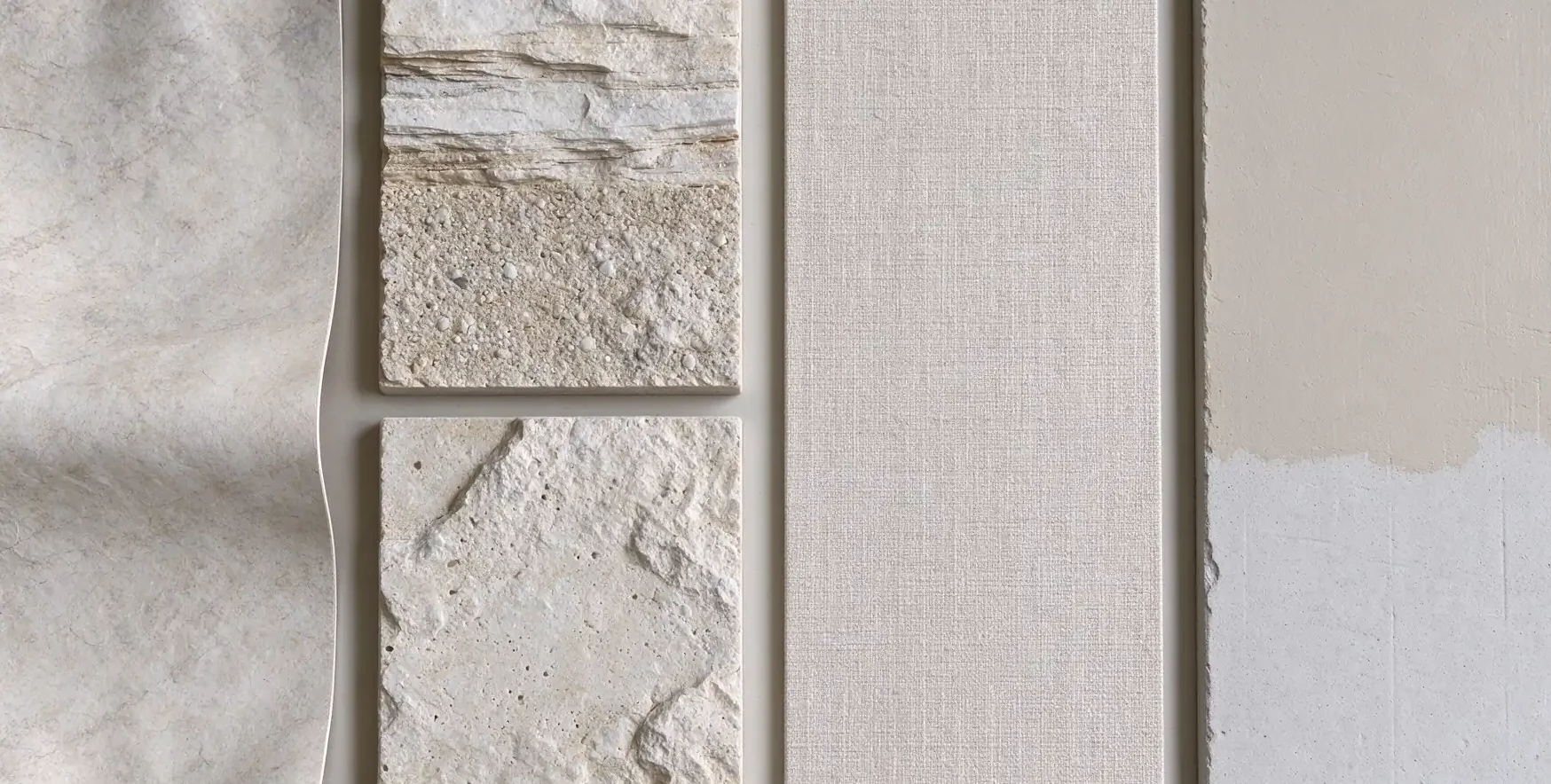
MCM Flexible Stone vs Natural Stone
When designers seek genuine stone texture, natural stone slabs are the classic option, but they come with major constraints for modern wall cladding projects.
Natural stone is heavy (20–40 kg/m²), rigid and brittle. It requires structural reinforcement for most partition walls, and cannot follow curved geometry without complicated CNC cutting. Transportation and installation costs are high, and on-site cutting creates large amounts of waste. While natural stone achieves premium texture, it increases project timeline and structural engineering risks, especially inside shopping malls with strict dead-load restrictions.
MCM Flexible stone sheets deliver nearly identical natural stone visual and tactile quality, but at a fraction of the weight. No structural reinforcement is required for most standard drywall partitions. Panels can bend to wrap curved surfaces and columns, with simple on-site cutting and less material waste. It is an excellent alternative for projects wanting stone aesthetics without the heavy structural and budget burdens of solid natural stone.
MCM Flexible Stone vs Wallcoverings (Wallpaper)
Wallcoverings are a low-cost, popular decorative option for interior walls, but they show clear weaknesses in high-traffic commercial environments.
Standard wallpaper is vulnerable to humidity, scuffs and liquid spills. In humid climates or busy retail / bar spaces, edges peel, mold grows behind the substrate, and surface patterns scratch easily. Wallpaper cannot be used for curved surfaces without complicated pattern matching, and the printed surface texture will wear and fade within a few years. Replacement means full wall stripping and rework.
MCM flexible stone sheets have a solid mineral surface, water and stain resistance, and no printed coating that wears away. It can be installed seamlessly across curved walls and feature walls. It resists scuffs and minor spills common in retail and hospitality spaces, with far longer service life than wallpaper. For commercial feature walls requiring durable textured finishes, flexible stone sheets outperform regular wallcoverings.
Side-by-Side Comparison Table of Key Performance Metrics
| Property | MCM Flexible Stone Sheets | Natural Stone | Wallcoverings / Wallpaper | Water-Based Latex Paint |
|---|---|---|---|---|
| Weight per m² | 3–7 kg, ultra-light | 20–40 kg, heavy | Light | Light |
| Curved surface adaptability | Bendable, wraps columns & curves | Rigid, cannot bend | Limited, prone to peeling on curves | Can be applied on curves, no texture depth |
| 3D tactile texture | Real mineral texture | Natural stone texture | Printed texture only | Smooth or hand-applied texture, easily damaged |
| Commercial fire rating | A1/A2 | A1 | Most are B / C class | Varies by paint formulation |
| Resistance to spills & scuffs | Good | Good, but heavy | Poor, easy to stain and tear | Poor, stains penetrate easily |
| Installation speed | Fast, adhesive application | Slow, heavy lifting & fixing | Medium, pattern matching required | Medium, multi-coat painting |
How to Choose the Right Wall Material For Your Project
No single wall finish works for all projects, and material selection depends on your core project priorities:
- Choose natural stone: If your budget is high, the wall is fully flat, and maximum raw natural stone authenticity is your top priority.
- Choose wallcoverings: For low-budget, low-traffic interior spaces with flat walls and low durability requirements.
- Choose water-based latex paint: For simple office walls, flat surfaces with no requirement for heavy tactile texture.
- Choose MCM flexible stone sheets: Choose MCM Flexible Stone Panels: With Class A fire resistance that meets the requirements of most projects and eco-friendly properties that make them safe for use in interior projects, MCM Flexible Stone Panels are the ideal choice when you want to create a stone-like texture, a lightweight finish, curved wall effects, and a durable surface for your walls.
FAQ
Can MCM flexible stone replace natural stone completely for commercial interior feature walls?
It is an excellent alternative for most commercial interior feature wall projects, especially when you need curved wrapping or face structural weight limits. It reproduces authentic stone and rammed earth texture, with much lighter weight and simpler installation. For projects requiring original mined natural stone with geological certification, natural stone slabs remain the better option.
How does the lifespan of flexible stone sheets compare to wallpaper in high-footfall retail spaces?
In busy retail environments, high-quality wallpaper typically lasts 2–4 years before fading, peeling or staining. Properly installed MCM flexible stone sheets can retain texture and colour for 15+ years with simple routine maintenance, without frequent full wall replacement.
Is MCM flexible stone more costly upfront than water-based latex paint?
Yes, the material cost is higher than latex paint. However, latex paint requires regular touch-ups and repainting in commercial spaces. Over the full lifecycle, flexible stone reduces recurring maintenance labour and material cost, delivering better long-term value for statement brand walls.
Can flexible stone sheets be applied over standard drywall, the same way wallpaper or paint is?
Yes, as long as the drywall substrate is flat, stable, dry and dust-free. Unlike natural stone, it does not require reinforced backing. Refer to our MCM flexible stone installation guide for full substrate preparation specifications.
Conclusion
Selecting wall finishes for commercial interior projects means balancing aesthetics, structural limits, installation schedule, durability and lifecycle cost. Traditional wall materials each carry inherent trade-offs: natural stone adds heavy structural loads, wallcoverings degrade quickly in high-traffic zones, and latex paint cannot create authentic deep tactile texture.
YITA MCM Flexible Stone combines a realistic mineral look, lightweight properties, adaptability to curved surfaces, and commercial-grade durability. It is ideal for commercial space walls, feature walls, column cladding, exterior wall renovations, high-rise building walls cladding, and other interior applications requiring a visual focal point—where the texture of natural stone is desired while avoiding the drawbacks of traditional wall materials.