

-
Call Now +86 13693186054
-
Any Questions info@yitaflexstone.com
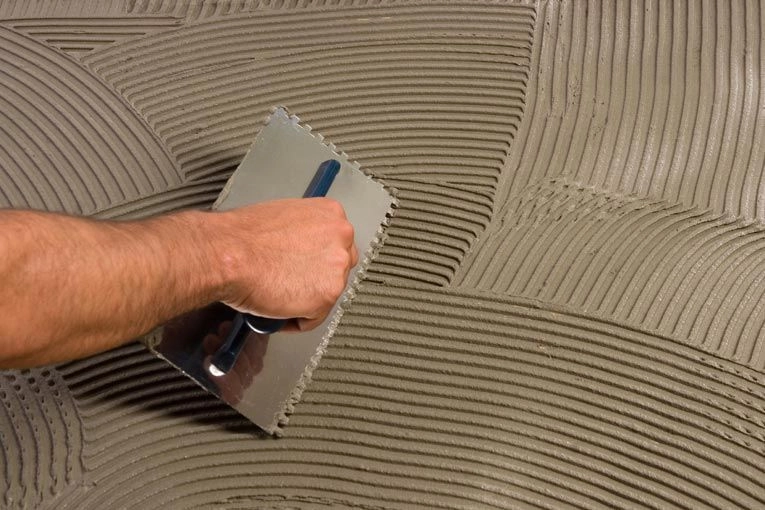
How to Choose Adhesive Mortar for MCM Flexible Stone?

MCM flexible stone is lightweight, thin and deformable wall cladding, but its long-term service life heavily depends on correctly matched adhesive mortar. Many project failures such as peeling, hollow spots and delamination are caused by selecting unsuitable bonding material rather than poor panel quality.
This article helps architects, contractors and specifiers select the right adhesive mortar according to project environment, substrate and cladding scenarios. It focuses on material classification, selection criteria and common pitfalls. For detailed field operation steps of mixing and applying adhesive, read our complete 《MCM flexible stone installation guide》.
Understand adhesive classification standard EN 12004-C2S1
EN 12004 defines performance grades for cementitious tile adhesives, which is the primary reference for MCM flexible stone bonding mortar.
- C1: Basic cement adhesive, tensile bond strength ≥0.5MPa. Only suitable for stable dry interior substrates and not recommended for MCM flexible stone. Its rigidity cannot follow slight thermal deformation of MCM panels, leading to debonding risk.
- C2: Improved cement adhesive with tensile bond ≥1.0MPa, required for low-absorption cladding materials such as MCM flexible stone.
- S1: Deformable flexible class, transverse deformation ≥2.5 mm. S1 adhesive can absorb minor thermal expansion, contraction and substrate shrinkage stress, which is essential for MCM flexible stone.
C2S1 means improved bond strength plus S1 flexibility, the most widely recommended adhesive mortar for MCM flexible stone interior and exterior installation. Extended open time (E) and anti-slump (T) variants like C2TES1 are preferred for large-area or vertical facade projects.
Core factors to select adhesive mortar for MCM flexible stone
Project environment: Interior vs Exterior
Interior dry areas: C2S1 polymer-modified cement mortar meets most requirements. White C2S1 mortar is preferred for light-colour MCM panels to avoid discoloration.
Exterior facades, wet zones or old building renovation: Must use C2S1 or C2TES1. Outdoor cladding bears UV, temperature cycles and moisture infiltration. Ordinary interior mortar lacks enough flexibility and weather resistance, and will degrade rapidly after freeze-thaw cycles.
Substrate compatibility
Check substrate condition before selecting adhesive mortar:
- Stable concrete, cement render: Standard C2S1 works well.
- Old ceramic tile surfaces, dense smooth substrates: Choose C2S1 with high adhesion; primer treatment is usually required to boost bonding.
- Gypsum board, aerated concrete: Apply compatible primer first, then use C2S1 adhesive.
- Metal or timber substrates: Cementitious C2S1 mortar is not suitable; use PU or two-component epoxy adhesive instead.
Application scenarios: flat walls vs curved surfaces
For flat interior walls, standard C2S1 is sufficient. Curved walls and wrapped columns require adhesive with stable flexibility and non-slump performance to prevent panel spring-back before curing. Large-size interior decorative panels can be secured along the edges using a pneumatic nail gun. Refer to our dedicated article: 《Can MCM flexible stone be used on curved walls?》. For tight-radius curved projects, extra compatibility testing of adhesive is strongly recommended.
Adhesive types comparison for MCM flexible stone
- Polymer-modified cementitious C2S1 mortar(Recommended default) Pros: Balanced bonding strength and flexibility, good weather resistance, cost-effective, easy mixing and construction for large projects. Cons: Not fit for non-mineral substrates such as bare metal.
- Two-component epoxy adhesive Pros: Ultra-high bond strength, chemical resistance. Cons: Higher cost, fast setting and higher technical requirements; mainly used for special wet or chemical-exposed areas, not for general large facade.
- Ready-mix dispersion adhesive Pros: Convenient, no mixing required. Cons: Only limited to dry interior decoration; not suitable for exterior or wet areas.
❗ Never use ordinary C1 tile mortar for MCM flexible stone facade. MCM panel has very low water absorption; rigid C1 mortar cannot follow thermal movement, which creates shear stress at bonding layer and triggers peeling risk.
Practical pre-construction test suggestion
Even if the adhesive meets C2S1 standard, perform a small-scale adhesion test on the actual substrate before full construction. This simple test verifies compatibility, avoids large-area failure and supports technical documentation for specification submission.
Common mistakes when choosing MCM flexible stone adhesive mortar
- Pick interior-grade adhesive for exterior facade.
- Use rigid C1 mortar, ignoring the flexible property requirement of MCM cladding.
- Select adhesive only by price without checking EN 12004 C2S1 certification and technical datasheet.
- Skip primer on smooth or porous substrate, which reduces bond strength significantly.
FAQ
What adhesive mortar should I use for MCM flexible stone?
C2S1 polymer-modified cementitious adhesive mortar conforming to EN 12004 is the recommended option for most interior and exterior MCM flexible stone cladding projects.
Can I use C1 tile mortar for MCM flexible stone?
Not recommended. C1 mortar has lower bond strength and no flexible deformability. It cannot adapt to thermal movement of MCM panels and may lead to peeling, especially for exterior walls.
Is C2S1 adhesive suitable for old building renovation with MCM flexible stone?
Yes, C2S1 is widely used for MCM flexible stone in old facade renovation, on condition that the substrate is stable, repaired and primed as required.
Do curved MCM walls need special adhesive mortar?
C2S1 can be used for curved walls. For tight-radius columns, select C2TES1 non-slump adhesive and carry out pre-installation adhesion testing.
Is white C2S1 adhesive better for light-colour MCM flexible stone panels?
Yes, white C2S1 adhesive prevents grey mortar bleed-through and staining on light-toned MCM flexible stone veneer.
Conclusion
Choosing adhesive mortar for MCM flexible stone is based on three core factors: exposure environment, substrate type and wall geometry. For most interior and exterior cladding projects, C2S1 polymer-modified cementitious adhesive mortar under EN 12004 standard is the primary choice, as it delivers ≥1.0MPa bond strength and enough S1 deformability to accommodate thermal and substrate movement.
C1 ordinary tile mortar is not recommended for MCM flexible stone, especially on exterior facades or renovation projects. Curved walls, wet areas and special substrates require upgraded adhesive grades or alternative resin-based bonding systems. Always run an on-site compatibility test before large-scale construction.
Adhesive selection is the precondition of reliable installation, while mixing, trowel application and compaction are covered in our MCM flexible stone installation guide. For project-specific datasheets, adhesive specification support and samples, contact the YITA technical team.