

-
Call Now +86 13693186054
-
Any Questions info@yitaflexstone.com
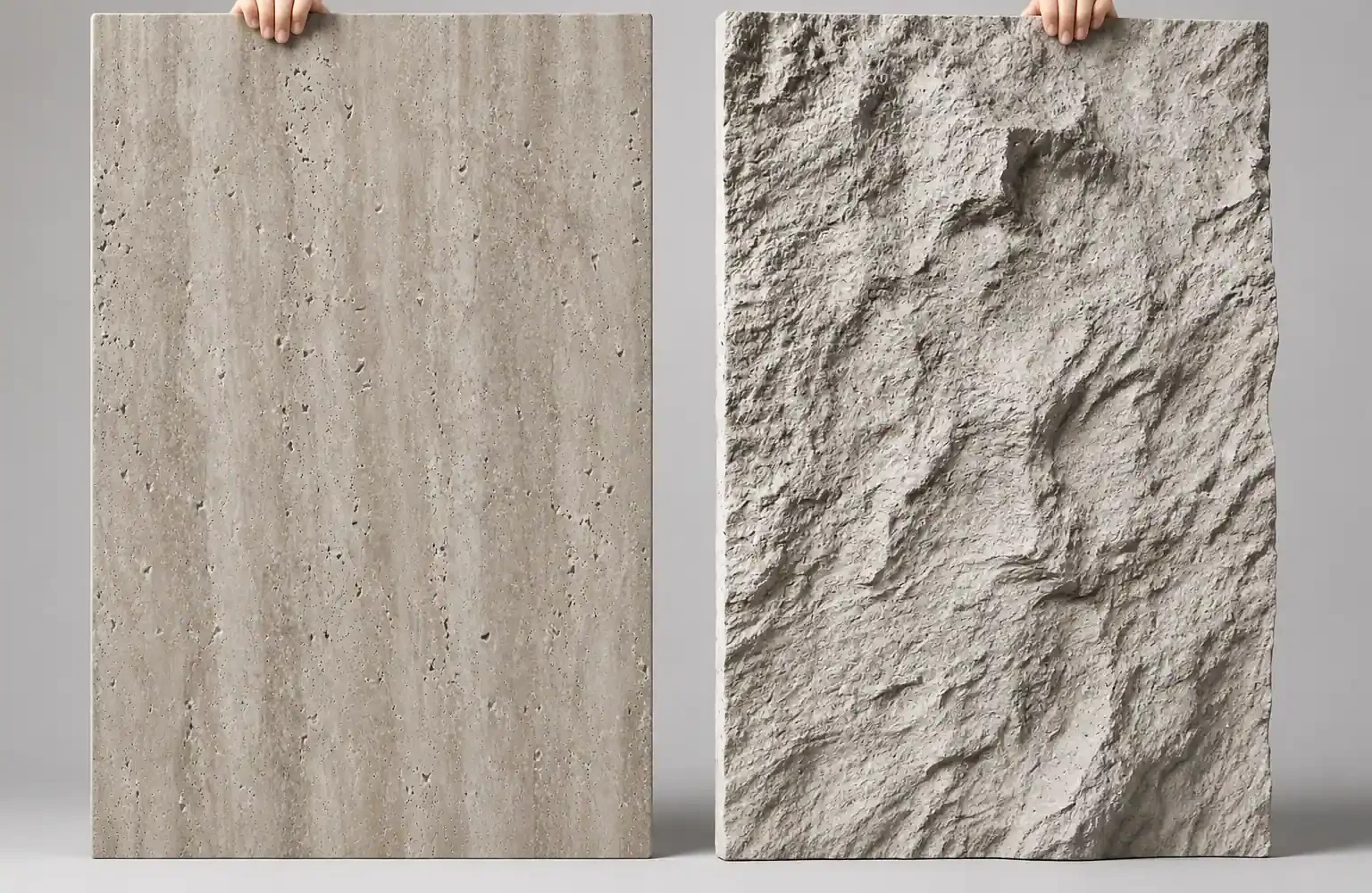
MCM Soft Stone vs PU Soft Stone: Comprehensive Analysis and Comparison

When architects and facade contractors search for bendable stone cladding, two names frequently appear: MCM Soft Stone (Modified Clay Material flexible stone veneer) and PU flexible stone (polyurethane faux stone panels). Many suppliers market both under the umbrella term “soft stone”, which creates widespread confusion. While both can wrap curved walls, columns and arches, their base chemistry, fire behaviour, vapour permeability, long‑term weathering, maintenance cycle and compliance paths are fundamentally different.
Note:This article draws on 8+ years of field installation data, third-party lab ageing & fire testing, CE / EN standards and real-world case records across Southeast Asia, the Middle East, Australia, EU and China.
Core Material & Manufacturing
Total installed cost = MCM flexible stone panel cost + adhesive & auxiliary material cost + labor cost + site surcharge + waste & contingency Among these items, substrate preparation is the largest variable that most estimators overlook. Many failed flexible stone veneer projects stem from inadequate substrate treatment, which also creates the biggest cost premium.
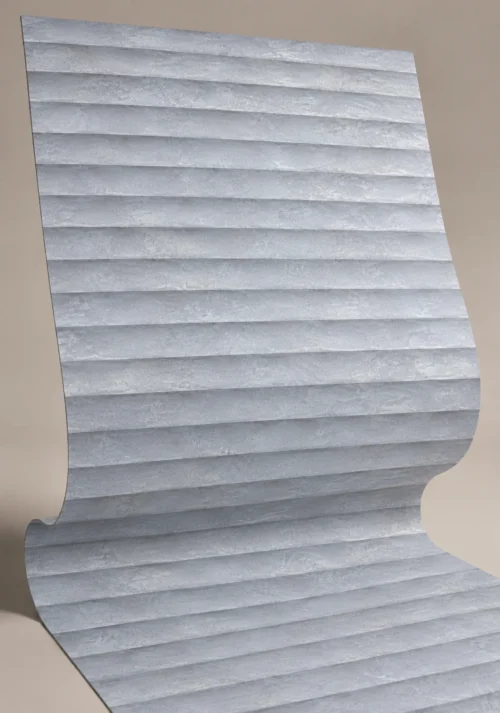
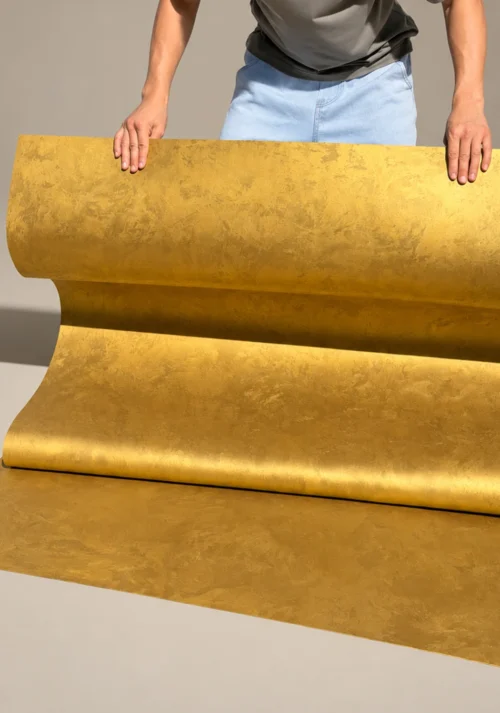
MCM stands for Modified Clay Material. MCM Soft Stone is an inorganic composite sheet dominated by modified clay, natural stone powder, mineral fillers and a small dosage of water‑based polymer binder. It is formed through low‑temperature curing and cross‑linking rather than high‑temperature firing or foam injection.
- Base: Inorganic mineral matrix (clay + stone powder)
- Thickness: 2–8 mm; typical facade grade 3–5 mm
- Weight: 3–6 kg / m²
- Key trait: Vapour permeable, breathable. Moisture trapped inside the wall assembly can migrate outward without blistering or delamination, which is critical for exterior overcladding, renovation and ETICS systems.
- Colour & texture: The mineral pigment is integrated into the sheet body, not only sprayed on the surface. Scuffing does not immediately reveal a contrasting white plastic substrate.
What is PU Soft Stone
PU soft stone is a cast synthetic panel built around polyurethane polymer. Most commercial variants use high‑density PU foam or solid PU resin, with stone powder mixed or a surface moulded texture layer applied on top.
- Base: Organic polyurethane polymer
- Thickness: Usually 15–50 mm; lightweight decorative variants can be thinner
- Weight: Very low, often 2–3 kg / m² for thick mushroom‑stone styles
- Key trait: Non‑breathable, fully closed‑cell waterproof barrier. It blocks vapour movement. If installed onto damp substrates or over old render without proper drainage, trapped moisture can cause adhesive failure, bubbling and mould behind panels.
- Colour & texture: Most textures are mould replicas; surface coating carries most UV protection. Once the top coat degrades, yellowing and chalking accelerate quickly.
Verification point: Many PU suppliers incorrectly label their product “MCM soft stone”. If a datasheet lists polyurethane as the primary raw material, it is not MCM Soft Stone.
Fire Safety & Smoke Performance (Highest Priority for Exterior & Public Buildings)
Fire rating is the single biggest differentiator for high‑rise facades, schools, hospitals, shopping malls and multi‑unit residential blocks.
- MCM Soft Stone: Standard exterior grade achieves A2 / Class A non‑combustible rating under EN 13501‑1 and relevant Chinese standards. When exposed to high heat, it will not melt, drip burning droplets or propagate flame. Smoke release is low and non‑toxic, because the continuous phase is mineral, not hydrocarbon polymer.
- PU Soft Stone: Base PU polymer is inherently combustible. Even fire‑retardant grades usually land at B / B‑s1‑d0. Under sustained heat, polyurethane melts and drips, and combustion releases carbon monoxide and cyanide‑containing smoke. Some premium PU panels pass limited surface flame tests, but this does not equal non‑combustible. For many EU, Australian and Middle Eastern high‑rise facade codes, PU stone is excluded from external rainscreen / facade cladding regardless of additive treatment.
Practical takeaway: If your project requires non‑combustible external cladding, MCM Soft Stone is the compliant choice. PU flexible stone remains suitable for low‑rise interior feature walls where fire code requirements are less restrictive.
Core Material & Manufacturing
Total installed cost = MCM flexible stone panel cost + adhesive & auxiliary material cost + labor cost + site surcharge + waste & contingency Among these items, substrate preparation is the largest variable that most estimators overlook. Many failed flexible stone veneer projects stem from inadequate substrate treatment, which also creates the biggest cost premium.
The inorganic mineral matrix is naturally stable under UV radiation. Qualified facade MCM passes 2000+ hours of accelerated ageing testing, which manufacturers map to roughly 20-30 years of outdoor service life in temperate, subtropical and desert climates. It resists acid rain, salt spray, freeze‑thaw cycles and thermal shock. In cold zones, the breathable structure prevents pressure build‑up from frozen moisture behind the veneer. Self‑cleaning mineral surface reduces permanent staining; rain washes most surface contaminants away.
Common failure mode: Poor installation, incompatible adhesive or priming skipped on dense substrates, rather than intrinsic UV breakdown.
PU Soft Stone
UV resistance depends entirely on the top coating. Without premium fluoropolymer coating, standard PU soft stone yellows, fades and chalks within 2–5 years in strong direct sunlight. It can survive freeze‑thaw cycles if fully sealed and drained, but closed‑cell waterproofing becomes a liability: if water enters at panel joints, it cannot escape, and repeated freezing will split the bond line. In coastal salt environments, coating delamination is a frequent warranty claim.
Common failure mode: Coating degradation, edge lifting, trapped moisture behind panels.
Vapour Permeability, Substrate Compatibility & Renovation Use
This section matters heavily for retrofits, old building facades and masonry substrates.
MCM Soft Stone is vapour permeable. It works directly over old tiles, cement render, concrete and well‑prepared masonry in renovation projects. Existing wall moisture can escape. This is the reason MCM is widely specified for heritage facades and external wall insulation finishing layers. The adhesive system must be mineral‑based flexible tile adhesive, matching its vapour behaviour.
PU Soft Stone is impermeable. It creates a waterproof skin. That makes it attractive for interior accent walls, but risky on damp masonry, old brick or walls with residual moisture. If you clad a breathing old masonry wall with impermeable PU panels, moisture becomes trapped between substrate and cladding. Over time, you see adhesive debonding, mould and hidden decay inside the wall.
Flexibility, Curved Application & Install Behaviour
Both can wrap curved surfaces, but their bend limits and installation workflows differ:
- MCM Soft Stone: Can wrap columns down to ~150 mm radius without cracking. It is thin and conformable, but the installer must accommodate slight substrate movement; it follows the substrate rather than bridging large voids. Cutting requires a utility knife or diamond blade.
- PU Soft Stone: Usually has deeper, bolder 3D rock texture. It bends easily and forgives minor substrate unevenness. Many DIY‑friendly versions can be cut with regular saws. Because panels are thicker and rigid‑flex, they bridge gaps better. This makes it popular for theme parks, film sets, fireplace surrounds and quick interior feature walls.
Cost Breakdown: Upfront vs Whole‑Life
Many buyers only compare material per square metre price.
- PU Soft Stone: Lower upfront material cost, faster installation for simple interior walls. But coating refreshment or panel replacement may be needed within 2 years outdoors. Fire‑rated PU additives and premium UV coatings narrow the price gap quickly.
- MCM Soft Stone: Higher entry‑level material and adhesive cost, more rigorous surface preparation. However, its long outdoor service life, low maintenance and code compliance reduce replacement, repair and liability risk over decades. For commercial facade projects, the whole‑life cost often favours MCM Soft Stone.
Regional cost pattern: In Australia, EU and Middle East, facade fire compliance premiums make non‑combustible MCM much easier to insure and approve. In Southeast Asia residential interior projects, PU soft stone remains a budget decorative option.
Maintenance & Repair
- MCM Soft Stone: Surface is mineral. Stains can be cleaned with mild masonry cleaners. If one sheet is damaged, individual replacement is possible without pulling down a large panel section. Colour runs through the sheet.
- PU Soft Stone: Scratches that cut through the top coat expose the polymer core. Touch‑up paint is visible and hard to colour‑match. Damaged panels are usually replaced as whole units. Outdoor panels need periodic recoating with UV protective finish.
Side‑by‑Side Comparison Table
| Parameter | MCM Soft Stone | PU Soft Stone |
|---|---|---|
| Primary composition | Modified clay + natural stone powder (inorganic) | Polyurethane polymer (organic) |
| Fire classification | A2 / Class A non-combustible | Typically B / flame-retardant; not non-combustible |
| Vapour permeability | Breathable, vapour open | Closed, impermeable |
| Typical thickness | 2–8 mm | 15–50 mm |
| Weight | 3–6 kg/m² | Approx. 2–3 kg/m² |
| UV / outdoor lifespan | 20–30 years under correct installation | 2–5 years, heavily coating-dependent |
| Best fit | High-rise facades, renovation, ETICS, public buildings, exterior curved cladding | Low-rise interior feature walls, theme sets, indoor curved accent walls |
| Risk points | Failed priming / wrong adhesive | Yellowing, trapped moisture, fire code non-compliance, toxic smoke |
How to Choose: Decision Framework
The right choice depends on your project requirements, installation environment and local building regulations. MCM Soft Stone is generally better suited to projects that prioritize mineral-based materials, thin-profile cladding and demanding architectural applications, while PU Soft Stone may be a practical option for decorative interiors where deep textures, lower initial material costs and ease of installation are key considerations. Before making a decision, compare material specifications, verified fire performance, substrate compatibility, maintenance requirements and total installation costs rather than relying on appearance or purchase price alone.
- Exterior facade, high‑rise, public, school, hospital or multi‑residential building
- The application is indoor feature wall, fireplace surround, shop interior, exhibition set
- Project specification requires non‑combustible cladding
- You are renovating old masonry, brick or damp‑prone substrates
- You want a long‑life low‑maintenance facade with matching mineral aesthetic
- Local codes (Australia, GCC, EU) restrict organic polymer cladding on external walls
Choose PU Soft Stone if
- Budget prioritises immediate material cost, and fire code allows combustible decorative panels
- You need deep 3D rock texture and simple, fast installation
- It is a temporary installation or design prop, not a permanent building envelope
Common Industry Pitfalls
- Labelling confusion: Suppliers rebrand PU panels as “MCM soft stone”. Always request full material safety datasheet (MSDS) and fire test report before specification.
- Assuming “flexible = same performance”: Bendability is shared, but vapour behaviour and fire chemistry are unrelated.
- Using PU on heritage or damp masonry: This is one of the most expensive retrofit mistakes our project partners observe across Southeast Asia and Europe.
- Wrong adhesive for MCM: Using generic construction adhesive instead of mineral flexible adhesive will create delamination even with genuine MCM Soft Stone.
- Ignoring local fire jurisdiction: A product passing a test in China may not satisfy facade requirements in Australia, Germany or Saudi Arabia.
FAQ
Can MCM Soft Stone be used indoors?
Yes. It works for interior curved walls, columns and feature surfaces, but its strongest commercial value is unlocked on exterior facades and renovation works.
How can I verify whether a supplier’s “soft stone” is real MCM?
Ask for: raw material composition statement, EN 13501‑1 fire report, accelerated ageing test certificate and vapour permeability test data. Genuine MCM will list modified clay / mineral powder as primary ingredients.
Can PU stone be used outdoors?
It can be installed outdoors in some regions, but the designer must accept shorter service life, coating maintenance and possible non‑compliance with high‑rise facade fire codes.
Can MCM Soft Stone be installed over curved concrete and metal columns?
Yes, provided the substrate is stable, rigid, primed and matched with approved flexible adhesive. Minimum radius should follow the manufacturer’s technical sheet.
Conclusion
MCM Soft Stone and PU Soft Stone both deliver flexible stone aesthetics, yet they belong to separate material families. MCM Soft Stone is an inorganic, vapour‑permeable, non‑combustible mineral veneer built for permanent building envelopes and exterior facades. PU soft stone is a lightweight organic polymer decorative panel, best suited to controlled indoor environments where fire and long‑term weathering risks are limited.
For facade engineers, specifiers and procurement teams, the core question is not “which looks more natural?” but whether the material’s fire rating, vapour profile and weathering performance match the building assembly, substrate and local building code. When exterior durability, fire safety and renovation compatibility are central requirements, MCM Soft Stone is the technically preferred solution.